Medically reviewed by Irina Matache, MD · Last updated: October 12, 2026
Our Specialists for Acute Subdural Hematoma
Acute subdural hematoma is one of the highest-stakes operations in neurosurgery, and outcomes depend on experienced trauma neurosurgeons who can move fast without cutting corners. At UChicago, these patients are managed by fellowship-trained neurotrauma specialists around the clock.

Dr. Das serves as the Director of Surgical Neurotrauma at UChicago and oversees the Neurosurgical Trauma Fellowship, positioning her as the senior surgeon most likely to perform emergency surgery for acute subdural hematoma in the middle of the night. Her research is dedicated to understanding outcomes following severe traumatic brain injuries and identifying biomarkers that indicate injury severity.
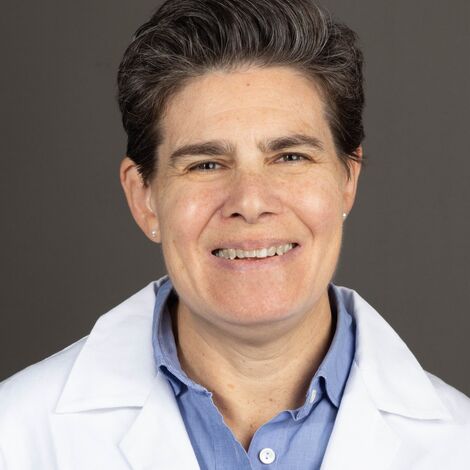
Dr. Raksin brings decades of experience in emergency cranial trauma surgery, including large-flap craniotomies and decompressive craniectomies for acute subdural hematomas. If you arrive at UChicago with an operative acute SDH, she is one of the senior surgeons on the trauma rotation making the craniotomy-versus-craniectomy call in real time.
What Is an Acute Subdural Hematoma?
An acute subdural hematoma (SDH) is a collection of blood that forms between the brain and the dura, the tough leathery membrane that lines the inside of the skull. In the acute form, the blood is fresh — usually less than 72 hours old — and it comes from bridging veins or small arteries that tore when the head was struck with force.
Acute SDH is almost always caused by severe head trauma: a fall from height, a motor vehicle collision, an assault, or a high-impact sports injury. In older adults, especially those on blood thinners, even a ground-level fall can be enough. Because the skull is a closed box, a rapidly expanding clot pushes on the brain from the outside and can shift it off midline within minutes to hours.
What makes acute SDH so dangerous isn't just the clot itself — it's the underlying brain injury. The same force that tore the vein often bruised the brain beneath it (a contusion) and set off swelling that keeps building for days after the bleed stops. That's why two patients with the same size clot on CT can have very different outcomes.
Roughly 10-30% of patients with severe traumatic brain injury have an acute SDH, and historically the reported mortality has ranged from about 40% to 60% in comatose patients. Modern trauma systems, faster CT scanning, and protocol-driven surgery have improved these numbers, but acute SDH remains one of the most lethal injuries in neurosurgery.
At a Glance
- An acute subdural hematoma is a rapidly expanding blood clot between the brain and its outer covering, almost always from severe head trauma
- Surgery is usually recommended when the clot is more than 10 mm thick, pushes the brain more than 5 mm off midline, or if the patient's neurologic exam is worsening
- The operation is either a craniotomy (remove clot, replace bone) or a decompressive craniectomy (leave the bone out to let the brain swell)
- The RESCUE-ASDH trial (NEJM 2023) showed that at 12 months, craniotomy and decompressive craniectomy produce similar disability outcomes
- Outcome depends heavily on age, Glasgow Coma Scale at arrival, pupillary response, and how quickly the brain is decompressed
Seeking a review of a Acute Subdural Hematoma diagnosis?
Your Acute Subdural Hematoma imaging and clinical records can be directed to the appropriate specialist, often within 24 hours.
What Does It Look Like?
Acute SDH almost always follows a clear-cut injury, but the symptoms can evolve over minutes to hours as the clot expands. A person may initially seem "okay" after the trauma and then deteriorate — the so-called lucid interval.
Early signs right after the injury
- Loss of consciousness at the time of impact
- Severe headache
- Confusion or not knowing where they are
- Nausea and vomiting
- Slurred speech
Signs that the clot is getting worse
- Increasing drowsiness or becoming harder to wake up
- One pupil becoming larger than the other (a "blown pupil")
- Weakness on one side of the body
- Seizures
- Slow heart rate with high blood pressure (a late sign of rising pressure in the skull)
- Unresponsiveness and abnormal posturing
Any of these warning signs after a head injury is a 911-level emergency. Get to the nearest trauma center as fast as possible.
How Is It Diagnosed?
Diagnosis of acute SDH happens in the emergency department and is usually fast — minutes, not hours.
Non-contrast head CT
The first and most important test is a non-contrast CT scan of the head. Acute blood shows up as a bright white, crescent-shaped collection that hugs the curve of the brain. The radiologist and neurosurgeon will measure two key numbers on that CT:
- Clot thickness — the maximum width of the blood collection
- Midline shift — how far the brain has been pushed from its normal center position
These numbers directly drive the decision to operate. Current surgical guidelines recommend evacuation of any acute SDH more than 10 mm thick or causing more than 5 mm of midline shift, regardless of the patient's GCS score. Smaller clots are also operated on urgently if the patient's exam is worsening, if the GCS drops by 2 or more points, if a pupil becomes unreactive, or if ICP is persistently above 20 mm Hg.
Neurologic exam and GCS
Alongside the scan, the team performs a focused neurologic exam. The Glasgow Coma Scale (GCS) — a 3 to 15 score based on eye opening, verbal response, and motor response — is a powerful prognostic marker. Pupil size and reactivity are checked repeatedly; a fixed and dilated pupil suggests the brain is being pushed into the tentorium (a process called uncal herniation) and turns the operation into a true race against the clock.
Whole-body trauma workup
Due to the severity of acute SDH, which is typically associated with multiple injuries, the patient undergoes a quick trauma assessment: imaging of the cervical spine, CT scans of the chest and abdomen, and lab tests including a coagulation panel. If the patient is taking blood thinners, reversal agents are administered without delay.
How Is It Treated?
Resuscitation comes first
Before any operation, the trauma team stabilizes the airway, breathing, and circulation. A comatose patient is intubated. Blood pressure is kept up to preserve brain perfusion. If the patient is on warfarin, a direct oral anticoagulant, or antiplatelet drugs, reversal is started immediately — prothrombin complex concentrate, platelets, or specific antidotes depending on the drug. Seizure prophylaxis is given.
Emergency craniotomy
A typical procedure for an acute subdural hematoma (SDH) that requires surgery is a large trauma craniotomy. During this operation, the surgeon creates a significant curved incision behind the hairline, removes a sizable section of bone (known as the bone flap), opens the protective dura layer, and removes the blood clot. The surgeon then locates and stops the bleeding source before closing the dura. Finally, the bone flap is replaced and fastened with small plates and screws.
The goal is not only to remove the clot but to stop the pressure from pushing the brain off midline. Every minute matters: the landmark Seelig study from 1981 showed that comatose patients operated on within 4 hours of injury had dramatically lower mortality (30%) than those operated on later (90%), and although modern systems have tempered those numbers, early decompression is still the single most actionable factor in outcome.
Decompressive craniectomy
During a decompressive craniectomy, a section of the bone is taken out and not replaced at the end of the procedure. The protective covering of the brain, called the dura, is then opened and secured with a patch. This allows the swollen brain to expand outward rather than being pressed against the skull. The patient will wear a helmet until the bone is put back in a later surgery, known as a cranioplasty, which can occur weeks to months after the initial procedure.
Historically, surgeons reached for a craniectomy whenever the brain looked "tight" or swollen at the time of surgery. The RESCUE-ASDH trial, published in the New England Journal of Medicine in 2023, randomized 450 adults undergoing surgery for acute SDH to craniotomy vs. decompressive craniectomy. At 12 months, disability and quality-of-life outcomes were similar between the two approaches. Craniectomy patients had fewer follow-on operations to control pressure but more wound complications. The takeaway: both operations are reasonable, and the choice comes down to surgeon judgment, brain swelling at the time of surgery, and whether the bone can be safely replaced.
ICP monitoring and neurocritical care
After surgery, patients go to the neuro-ICU, usually with an intracranial pressure (ICP) monitor — a thin probe placed in the brain that gives continuous pressure readings. The Brain Trauma Foundation guidelines recommend monitoring ICP in patients with severe TBI and an abnormal CT. When ICP rises, the team escalates through a tiered protocol: head-of-bed elevation, sedation, osmotic therapy (hypertonic saline or mannitol), CSF drainage, controlled hyperventilation, cooling, and, if refractory, a second decompressive craniectomy (the RESCUEicp protocol).
Rehabilitation
The recovery process for acute SDH spans several months rather than just days. Patients generally transition from the ICU to a neurosurgical ward, followed by a stay at an inpatient rehabilitation center for physical, occupational, and speech therapy. Continuous care involves cognitive evaluations, seizure tracking, and, for those who underwent a craniectomy, a future cranioplasty.
Need another perspective on Acute Subdural Hematoma?
Relevant specialists can review the Acute Subdural Hematoma case together and provide one coordinated recommendation.
What Are the Outcomes?
Outcomes after acute SDH are driven by a handful of factors that are set before the patient ever reaches the operating room: age, GCS at presentation, pupillary response, and the presence of underlying brain injury. How quickly the clot is removed and how well the ICU team controls swelling afterward are the things that can still be influenced.
Mortality by GCS and age
Across modern cohorts, mortality after surgical acute SDH ranges widely depending on who is being operated on. The Austrian multicenter study by Leitgeb and colleagues, which followed severe TBI patients with acute SDH, gives a useful picture:
| Group | 6-month mortality | Favorable outcome (GOS 4-5) | What to know |
|---|---|---|---|
| GCS 3-5 (deep coma) | ~65-80% | ~10-15% | Worst prognosis, especially with fixed pupils |
| GCS 6-8 (coma) | ~40-55% | ~25-35% | Intermediate; time to surgery matters |
| GCS 9-12 | ~15-25% | ~55-65% | Most survive with meaningful recovery |
| GCS 13-15 | ~5-10% | ~75-85% | Best outcomes |
| Age >75, any GCS | ~45-60% | ~15-25% | Age independently worsens outcome |
These ranges are based on surgical cases, specifically patients considered suitable for surgery. The presence of fixed or dilated pupils, a significant underlying contusion, or anticoagulation before the injury significantly increases mortality within each GCS category.
Functional outcomes
Mortality is only part of the story. Among survivors, many have meaningful recoveries — returning home, regaining independence, and in some cases returning to work. Younger patients and those with higher admission GCS generally do best. In the RESCUE-ASDH trial, at 12 months, roughly 30-40% of surgical patients achieved "upper good recovery" or "lower good recovery" on the extended Glasgow Outcome Scale, while about 30% had died and the remainder fell into the severely or moderately disabled range.
Decompressive craniectomy vs. craniotomy
For years it was unclear whether more aggressive surgery — taking the bone off and leaving it off — improved outcomes for acute SDH. RESCUE-ASDH answered this prospectively. Among 450 patients randomized to craniotomy or decompressive craniectomy:
- 12-month mortality was 30.2% in the craniotomy group vs. 32.2% in the craniectomy group (no significant difference)
- Disability and quality of life at 12 months were similar between groups
- Additional cranial surgery within 2 weeks was needed in 14.6% of craniotomy patients vs. 6.9% of craniectomy patients
- Wound complications occurred in 3.9% of craniotomy patients vs. 12.2% of craniectomy patients
The observational CENTER-TBI cohort reached a similar conclusion: centers that favored decompressive craniectomy did not achieve better functional outcomes than centers that favored craniotomy. In other words, both operations work — what matters is that an experienced trauma neurosurgeon is making a fast, judgment-driven call in the OR based on what the brain is doing at the moment of decompression.
That judgment is the single biggest reason the identity of the surgical team matters. Acute SDH is one of the operations where having a fellowship-trained neurotrauma surgeon in the room changes what is possible.
References
Have Questions About Acute Subdural Hematoma?
The team can review your Acute Subdural Hematoma records, explain the available options, and help arrange the next step.
Schedule: (773) 702-2123