Medically reviewed by Dina Mohammed, MD · Last updated: September 29, 2026
Our Specialists for Carotid Artery Stenosis
Carotid disease sits at the intersection of neurology, vascular surgery, and neurosurgery. At UChicago, fellowship-trained neurovascular surgeons perform both open carotid endarterectomy and modern stent-based procedures, and they make the call about which one is right for you based on the actual anatomy of your artery — not a one-size-fits-all protocol.
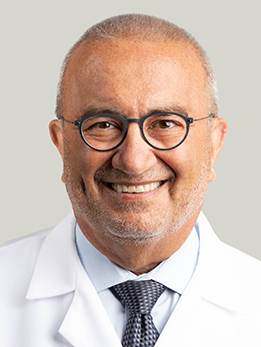
Dr. Awad was recruited to lead UChicago's Neurovascular Surgery Program in 2010 and has performed carotid endarterectomy throughout a cerebrovascular career that has drawn referrals from across the country. If you have complex carotid disease at UChicago — recurrent stenosis, a hostile neck, or tandem intracranial disease — he is one of the surgeons reviewing your imaging.

Dr. Polster, the Co-Director of the Stroke Center and head of the Skull Base & Neurovascular Laboratory at UChicago, leads the Gut-Brain Axis Laboratory. He was the first to show that the gut microbiome affects how radiosurgery impacts the neurovascular unit. Supported by NIH NINDS R-level funding, his research has appeared in Nature Communications, Blood, Stroke, and the Journal of Neurosurgery. Dr. Polster, who trained in open cerebrovascular surgery with Dr. Awad, oversees both symptomatic and asymptomatic carotid stenosis patients in the UChicago neurovascular clinic, guiding them through medical optimization, endarterectomy, and stent-based revascularization.
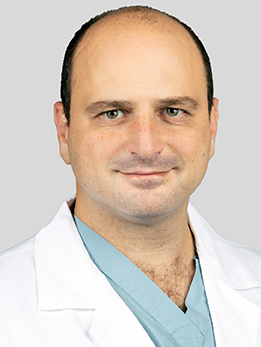
Dr. Doron's specialized training in endovascular procedures allows him to provide transfemoral carotid stenting and TCAR as options instead of open endarterectomy for patients with difficult neck anatomy, previous radiation, or medical conditions that pose risks with general anesthesia. The choice of procedure is determined by the unique characteristics of your plaque and aortic arch.
What Is Carotid Artery Stenosis?
Your carotid arteries are the two large blood vessels in the front of your neck that carry most of the blood supply to your brain. You can feel them pulsing on either side of your windpipe. Over time — and especially if you have high blood pressure, high cholesterol, diabetes, or a history of smoking — cholesterol-rich plaque can build up inside the wall of the carotid artery. When the plaque gets thick enough to narrow the channel the blood flows through, that narrowing is called carotid artery stenosis.
The narrowing itself doesn't usually cause symptoms. What causes trouble is when a fragment of the plaque breaks off and travels up into the brain, or when the plaque's surface cracks and a blood clot forms on top of it. Either of these can block a brain artery and cause a stroke or a transient ischemic attack (TIA) — a warning stroke where the symptoms go away within minutes or hours.
Extracranial carotid disease — meaning narrowing of the carotid in the neck, before it enters the skull — is responsible for roughly 10-15% of all ischemic strokes. That number matters because, unlike many other stroke causes, this one can often be fixed before the big stroke ever happens. Finding the narrowing and treating it correctly is one of the clearest wins in stroke prevention.
At a Glance
- Carotid stenosis is a narrowing of the large neck arteries that supply the front of the brain, almost always from cholesterol plaque
- It causes about 10-15% of all ischemic strokes, and many of those strokes are preventable if the narrowing is found and treated
- A warning stroke or TIA ("mini-stroke") dramatically raises your risk — and dramatically raises the benefit of fixing the artery
- The three ways to open the artery are carotid endarterectomy (CEA), transfemoral stenting (CAS), and transcarotid artery revascularization (TCAR)
- For most symptomatic patients with tight stenosis, surgery plus aggressive medical therapy cuts the 5-year stroke risk by more than half
Do you have imaging related to Carotid Artery Stenosis?
A specialist familiar with Carotid Artery Stenosis can review your available studies and records, often within 24 hours.
What Does It Feel Like?
Most carotid stenosis is silent. People are often surprised to learn their artery is 80% blocked because they felt completely normal. That's why the disease is frequently picked up incidentally — during a neck ultrasound ordered for another reason, during workup for a heart murmur, or when a doctor hears a soft whooshing sound (a bruit) with a stethoscope over the neck.
When carotid stenosis leads to symptoms, they typically arise from plaque or clot fragments traveling to the brain or eye. These symptoms almost always appear suddenly and usually impact only one side of the body—the side opposite the narrowed artery.
Warning signs of a TIA or stroke from carotid disease
- Sudden weakness or numbness in the face, arm, or leg — usually on one side
- Sudden trouble speaking, slurred speech, or trouble understanding what others are saying
- A sudden shade or curtain pulling down over the vision of one eye (called amaurosis fugax)
- Sudden loss of balance, coordination, or a feeling that the room is spinning
- A sudden severe headache with no clear explanation
If any of these happen — even if they go away in a few minutes — call 911 immediately. A TIA is not a false alarm. It is the single strongest warning sign that a bigger stroke may be coming within days or weeks, and it is the moment when carotid surgery saves the most lives.
How Is It Diagnosed?
The workup usually starts with a carotid duplex ultrasound. It's painless, takes about 30 minutes, and uses sound waves to measure both the diameter of your artery and how fast the blood is moving through it. Faster flow through a tighter spot means more severe stenosis. Ultrasound is excellent as a screening test and is usually the first study ordered.
If the ultrasound shows a significant narrowing — or if the picture is unclear — your team will typically confirm the findings with a second study:
- CT angiography (CTA) of the neck and brain. This gives a detailed 3D map of every artery from your aorta to the top of your head and shows exactly where the plaque is, how long it extends, and whether it has calcium in it. CTA also looks at the arteries inside the brain to make sure a downstream problem isn't being missed.
- MR angiography (MRA). Similar information without radiation, sometimes preferred in younger patients or when contrast dye is a concern.
- Catheter angiography. The gold standard, but invasive. Reserved for cases where the non-invasive imaging is ambiguous or where your surgeon needs to see the blood flow in real time to plan the procedure.
Your doctor will also measure the degree of stenosis as a percentage — how much of the artery's normal diameter has been lost — because that number drives nearly every treatment decision. The standard used in modern trials is the NASCET method, where 70-99% stenosis is considered severe.
Finally, if you've had symptoms, you'll also need brain imaging (usually MRI) to look for evidence of small strokes you may not have noticed, and an evaluation of your heart rhythm and blood pressure to rule out other stroke causes like atrial fibrillation.
Types of Carotid Artery Stenosis
Carotid stenosis is classified two ways — by whether it has caused symptoms and by how tight the narrowing is. Both matter, and together they determine whether you're a candidate for surgery.
Symptomatic vs. asymptomatic
- Symptomatic carotid stenosis. You've had a TIA, a stroke, or sudden monocular vision loss in the past 6 months on the side matching the narrowed artery. Your risk of another stroke over the next two years without treatment is very high — and the benefit of fixing the artery is largest.
- Asymptomatic carotid stenosis. The narrowing was found incidentally and has never caused symptoms. Your annual stroke risk on modern medical therapy alone is much lower — often 1% per year or less — so the decision about whether to operate is more nuanced and depends on your life expectancy, your overall health, and the specific features of the plaque.
By degree of stenosis (NASCET method)
- Mild (under 50%). Surgery is not recommended. The treatment is medical — statin, antiplatelet, blood pressure control, and risk factor management.
- Moderate (50-69%). For symptomatic patients, surgery provides a modest but real benefit and is usually offered. For asymptomatic patients, medical therapy alone is typically the right answer.
- Severe (70-99%). This is where surgery shines. Symptomatic patients have the most to gain. Many asymptomatic patients with tight stenosis, a good life expectancy, and high-risk plaque features are also reasonable surgical candidates.
- Near-occlusion or complete occlusion (100%). Once the artery is fully blocked, opening it surgically generally does not help and may be harmful. Treatment shifts to aggressive medical therapy and protecting the remaining blood flow.
How Is It Treated?
Step 1: Medical therapy — for everyone
Whether or not you end up having surgery, every patient with carotid stenosis needs aggressive medical management. The goal is to stabilize the plaque you already have and keep new plaque from forming.
- High-intensity statin. Statins don't just lower cholesterol — they change the chemistry of the plaque itself and make it less likely to rupture. An LDL target under 70 mg/dL (and often under 55) is the current standard.
- Antiplatelet therapy. Usually aspirin 81 mg daily, sometimes clopidogrel, depending on your history.
- Blood pressure control. Target under 130/80 in most patients.
- Diabetes management, smoking cessation, and exercise. Stopping smoking is the single highest-impact thing you can do for your carotid arteries — the benefit begins within weeks.
Step 2: Choose the right procedure — if you need one
There are three accepted ways to mechanically open a narrowed carotid artery. All three work, but they have different strengths and the choice depends on your anatomy, age, and risk profile.
Carotid endarterectomy (CEA)
CEA is the oldest and best-studied carotid procedure and is still considered the gold standard for most patients with symptomatic severe stenosis. Through a small incision on the side of your neck, the surgeon opens the artery, physically peels the plaque out of the vessel wall, and then either sews the artery closed directly or with a small patch. The operation takes 1-2 hours and most patients go home the next day. The landmark NASCET trial showed that CEA plus medical therapy reduced the 2-year stroke risk in symptomatic patients with 70-99% stenosis by an absolute 17 percentage points compared with medical therapy alone.
Carotid artery stenting (CAS)
In transfemoral carotid artery stenting (CAS), a specialist guides a slender catheter to the carotid artery from the groin (or occasionally the wrist), uses a tiny balloon to widen the narrowed area, and installs a metal mesh stent to keep it open. A filter positioned above the narrowed section captures any dislodged plaque fragments during the procedure. CAS bypasses the need for a neck incision and general anesthesia, offering benefits to patients with challenging neck anatomy, previous neck radiation, or serious heart or lung conditions that make open surgery dangerous.
Transcarotid artery revascularization (TCAR)
TCAR, the most recent of the three procedures, is quickly gaining popularity as an alternative to transfemoral stenting. This method involves a tiny incision at the neck's base, where the surgeon accesses the lower (common) carotid artery. A device is then attached to temporarily reverse the blood flow direction in the carotid artery, which removes any debris from the brain and filters it externally. The stent is placed through this direct access. Since the brain is safeguarded by flow reversal throughout the procedure's risky phase, TCAR has demonstrated some of the lowest periprocedural stroke rates among stent-based carotid interventions, with outcomes comparable to CEA in real-world registries.
How we decide
The short version: symptomatic patients under 70 often do equally well with CEA or stenting. Older patients (especially over 75) generally do better with CEA than with transfemoral stenting because their aortic arch anatomy makes stent delivery riskier — though TCAR narrows that gap considerably. Patients with high-risk anatomy — a prior neck dissection, radiation, contralateral vocal cord paralysis, or a very high stenosis near the skull base — are usually better served by TCAR or stenting. Your team reviews your imaging together and picks the option with the lowest expected risk.
Planning treatment for Carotid Artery Stenosis?
Your Carotid Artery Stenosis records can be discussed by the appropriate specialists so the recommendation reflects the full case.
What Are the Outcomes?
Carotid surgery is one of the most durable preventive operations in medicine. When it is done correctly, in the right patient, by an experienced team, it lowers the 5- and 10-year stroke risk dramatically and the benefit is lifelong.
Here is what the major randomized trials have shown:
| Patient group | Treatment | Key outcome | Source |
|---|---|---|---|
| Symptomatic, 70-99% stenosis | CEA + medical vs. medical alone | 17% absolute reduction in 2-yr stroke | NASCET, 1991 |
| Asymptomatic, >60% stenosis | CEA + medical vs. medical alone | ~5% absolute reduction in 5-yr stroke | ACAS 1995 / ACST-1 2010 |
| Any (sympt. + asympt.) | CEA vs. CAS, 30-day stroke | 2.3% (CEA) vs. 4.1% (CAS) | CREST, 2010 |
| Any (sympt. + asympt.) | CEA vs. CAS, 30-day MI | 2.3% (CEA) vs. 1.1% (CAS) | CREST, 2010 |
| 10-year CREST follow-up | CEA vs. CAS, all stroke/MI/death | No significant difference | Brott, NEJM 2016 |
| High-risk patients, TCAR | TCAR vs. transfemoral CAS | ~50% lower stroke/death in-hospital | Schermerhorn, JAMA 2019 |
The big picture
If you have a symptomatic 70-99% stenosis and you're a reasonable surgical candidate, doing nothing is by far the most dangerous option. CEA remains the benchmark: roughly half the 5-year stroke risk compared with medical therapy alone, with a 30-day stroke-or-death rate around 2-3% in experienced hands. CREST and its 10-year follow-up established that CAS and CEA are roughly equivalent in the long run — CEA has slightly more heart attacks in the periprocedural window, and CAS has slightly more minor strokes, but the disabling-stroke and long-term outcomes are similar. TCAR, now widely adopted, has closed the stroke gap for patients who aren't ideal for open surgery.
For asymptomatic patients, the calculus is harder. With modern statins and blood pressure control, the natural-history stroke risk is now low enough that not every 70% stenosis needs an operation. The decision should be made by a team that does these procedures often, reviews your imaging in detail, and can quote you their own outcomes — not just the averages from trials.
References
Have Questions About Carotid Artery Stenosis?
Call the department to discuss Carotid Artery Stenosis, request a case review, or plan an appointment.
Schedule: (773) 702-2123