Medically reviewed by Maliya Delawan, MD · Last updated: October 3, 2026
Our Specialists for Essential Tremor
Essential tremor is one of the conditions where the surgeon you choose matters most. Tremor surgery is a sub-specialty within functional neurosurgery, and UChicago is one of a small number of centers that offers every modern option — deep brain stimulation, MR-guided focused ultrasound, and radiosurgical thalamotomy — under one roof so you can pick the right tool for your life.
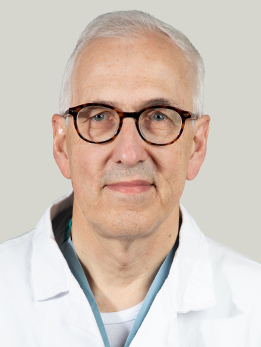
Dr. Warnke is an internationally recognized functional neurosurgeon with more than 8,000 stereotactic procedures to his name, including deep brain stimulation and stereotactic thalamotomy for essential tremor. For patients at UChicago who are not candidates for focused ultrasound, he offers DBS with awake microelectrode mapping and can also perform laser and radiosurgical thalamic lesioning when an ablative approach is preferred.
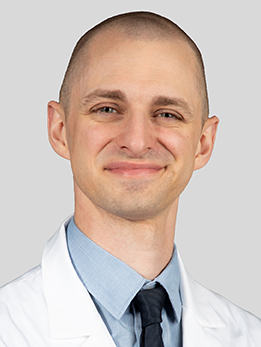
Dr. Satzer is a UChicago functional neurosurgeon who performs VIM deep brain stimulation and laser thalamotomy for essential tremor, and whose research on local field potentials and neuromodulation biomarkers (Neurology, 2019) informs how tremor patients are programmed and followed long-term at UChicago.
What Is Essential Tremor?
Essential tremor is a condition of the brain that leads to rhythmic, involuntary shaking, usually affecting the hands but sometimes also the head, voice, or legs. Unlike Parkinson's disease tremor, which typically worsens when you're not moving, essential tremor is an action tremor: it appears when you do something, like reaching for a glass, bringing a spoon to your mouth, threading a needle, or signing your name.
It is by far the most common movement disorder in adults. Roughly 1 in 100 adults have essential tremor, and the number climbs to about 5% in people over age 65. Many people assume shaky hands are "just getting older" — but essential tremor is a specific, diagnosable condition, and it often runs in families. About half of patients have a close relative who also has tremor.
Most people can manage essential tremor for years with nothing more than reassurance, wrist weights, and a glass of wine before dinner parties. But for a meaningful minority, the tremor becomes disabling — you stop drinking soup in restaurants, you avoid writing in public, you give up woodworking or painting, you can no longer button a shirt. That is when it is worth talking to a functional neurosurgeon.
At a Glance
- Essential tremor is the most common movement disorder in adults, affecting roughly 1% of all adults and up to 5% of people over 65
- It usually shows up as an action tremor — shaking when you reach, pour, write, or hold a cup — rather than shaking at rest
- First-line medications are propranolol and primidone, but about 30–50% of patients either don't respond or can't tolerate the side effects
- Surgical options include VIM deep brain stimulation (DBS), MR-guided focused ultrasound (MRgFUS) thalamotomy — which is incisionless — and gamma knife radiosurgical thalamotomy
- Good surgical candidates often see a 50–75% reduction in tremor and dramatic improvement in quality of life
Have recent studies for Essential Tremor?
Call to arrange a specialist review of your Essential Tremor imaging and records, often within 24 hours.
What Does It Feel Like?
Essential tremor typically begins subtly, often affecting one hand, and progressively worsens over time. It tends to intensify during stress, caffeine consumption, fatigue, and temperature fluctuations, but may temporarily ease with a small amount of alcohol—a distinguishing feature from other types of tremors.
Classic signs of essential tremor
- Shaking when you reach, hold, or use your hands — not when they are resting in your lap
- Trouble drinking from a cup, especially the first sip (spills are often the first thing patients mention)
- Handwriting that has become large, messy, or shaky
- Difficulty with fine motor tasks: buttoning shirts, using keys, applying makeup, eating soup
- A trembling "yes-yes" or "no-no" head tremor, or a shaky voice
- Family history of similar tremor in a parent, sibling, or grandparent
What essential tremor is not
- Not Parkinson's disease. Parkinson tremor is usually a resting tremor, often with stiffness and slowness of movement. Essential tremor is an action tremor without those features.
- Not caused by anxiety, although stress makes it worse. The tremor is still there when you are calm.
- Not caused by caffeine alone — though cutting caffeine can reduce it a bit.
How Is It Diagnosed?
Essential tremor is diagnosed clinically — meaning a neurologist watches you, examines you, and takes a detailed history. There is no single blood test or scan that proves you have it. Instead, your doctor is looking for the characteristic pattern of an action tremor without the other features of Parkinson's disease or another underlying cause.
A typical workup includes:
- A focused neurologic exam, including watching you reach, pour water, draw spirals, and write a standard sentence
- Review of all medications and supplements — some drugs (lithium, valproate, certain asthma medications, stimulants) can cause or worsen tremor
- Blood tests to rule out thyroid disease, low magnesium, and in younger patients, Wilson disease (a rare copper disorder)
- Sometimes an MRI of the brain to rule out structural causes, especially if the tremor is one-sided or came on suddenly
- In difficult cases, a DaTscan — a nuclear imaging test that helps distinguish essential tremor from early Parkinson's disease
Tremor severity is usually measured with the Clinical Rating Scale for Tremor (CRST), sometimes called the Fahn-Tolosa-Marin scale. This is the same scale used in clinical trials, and we use it before and after any surgical treatment to show patients exactly how much their tremor has improved.
DBS vs Focused Ultrasound vs Radiosurgery — How to Choose
Today's main question regarding tremor surgery isn't if the surgery is effective—it is, and the evidence is robust—but which technique suits you best. Each of the three contemporary methods aims at the same small area: the ventral intermediate nucleus (VIM) of the thalamus, a pea-sized relay that transmits tremor signals to the motor cortex. However, they reach this point in distinctly different manners.
VIM Deep Brain Stimulation (DBS)
A thin electrode is implanted into the VIM through a small hole in the skull and connected to a pacemaker-like battery under the collarbone. Once turned on, the stimulator blocks the tremor signal. DBS is adjustable (your surgeon can tune it for years as your tremor changes), reversible (you can turn it off), and the only option that can safely treat both hands by placing a second electrode on the other side of the brain.
MR-Guided Focused Ultrasound (MRgFUS) Thalamotomy
This is an incisionless procedure. You lie inside an MRI scanner wearing a helmet that focuses over a thousand ultrasound beams on a single spot in the thalamus, heating and ablating a few millimeters of tissue. There are no holes drilled in the skull, no implanted hardware, and no battery to replace. Most patients walk out the same day with dramatic tremor reduction in one hand. FDA-approved for unilateral treatment in 2016; bilateral (both hands) treatment was FDA-approved in 2022 and is offered at select centers.
Gamma Knife Radiosurgical Thalamotomy
Gamma knife therapy employs precise radiation beams to form tiny lesions in the thalamus over a span of weeks to months, instead of a single procedure. This method is non-invasive and does not necessitate anesthesia, which makes it suitable for elderly patients, those on blood thinners that cannot be paused safely, or individuals for whom DBS or MRgFUS are not viable due to anatomical constraints.
How we help you decide
- Both hands shaking? DBS is usually the best answer — it is the only procedure routinely done bilaterally with full safety data, though bilateral MRgFUS is now an emerging option.
- Want to avoid implanted hardware? MRgFUS or gamma knife.
- Need adjustability or worried about drilling? DBS is adjustable; MRgFUS is incisionless.
- On blood thinners, older, or high surgical risk? Gamma knife is the gentlest option.
- Skull too thin or thick for ultrasound? About 10–15% of patients can't get MRgFUS for this reason. DBS or gamma knife is the answer.
At UChicago, we walk every tremor patient through this decision together. There is no "best" procedure — there is the procedure that best fits your tremor, your anatomy, and your life.
How Is It Treated?
Step 1: Medication
Almost everyone starts with medication. The American Academy of Neurology guidelines list two drugs as first-line:
- Propranolol — a beta-blocker originally used for blood pressure. It typically reduces hand tremor by about 50% in responders. Side effects: fatigue, slow heart rate, low blood pressure, exercise intolerance.
- Primidone — an older anti-seizure medication. Works as well as propranolol but often causes drowsiness, nausea, or unsteadiness, especially at the start.
Second-line options include topiramate, gabapentin, and benzodiazepines like clonazepam. Unfortunately, 30–50% of patients either don't respond to these medications or can't tolerate them. That is the group that benefits most from surgery.
Step 2: Surgery — when pills fail
If you have disabling tremor despite trying at least two medications at adequate doses, you are a potential candidate for surgery. All three surgical options target the same structure (the VIM thalamus) and all three work — the differences come down to what the procedure feels like and what fits your life. See the DBS vs Focused Ultrasound vs Radiosurgery section above for the decision tree.
What DBS surgery is actually like
Deep brain stimulation (DBS) typically unfolds in one or two phases. In the brain phase, a slender electrode is meticulously inserted through a tiny skull opening, guided by stereotactic targeting, either with or without a frame. Some centers conduct the electrode placement while the patient is awake, enabling the team to test the stimulation in real time and see tremors cease on the operating table. Other centers perform the procedure with the patient fully asleep, utilizing intraoperative imaging. Both approaches are effective when executed by an experienced team. About a week or two later, the pulse generator (battery) is implanted under the collarbone in a shorter, separate procedure. You can return home the same day of the battery placement. Programming of the device takes place over the following weeks in a clinic setting.
What MRgFUS is actually like
For MR-guided focused ultrasound, you come in the morning, have your head shaved, and a stereotactic frame is placed under local anesthesia. You lie in the MRI for several hours while the team delivers test sonications and checks the effect on your tremor between each one. When the team and you are satisfied, a final therapeutic sonication creates the permanent lesion. Most patients see their tremor disappear during the procedure itself, watching it happen in real time. You go home the same day — no incision, no stitches, no hardware.
Recovery
After DBS: incision soreness for a week, stimulator turned on at the first programming visit (usually 2–4 weeks after surgery), and progressive improvement as the settings are refined over weeks to months. After MRgFUS or gamma knife: minimal recovery. Most patients are back to their normal routine within a day or two, though balance and gait may feel slightly off for several weeks.
Would a second review of your Essential Tremor plan help?
The team can compare the available Essential Tremor approaches and give you a coordinated recommendation.
What Are the Outcomes?
Tremor surgery often yields one of the most rewarding results in neurosurgery. For carefully chosen patients, the tremor disappears almost immediately on the operating table, and within hours or days, they can drink from a cup, write legibly, or sign their name for the first time in years. The key question is how lasting this improvement is, and long-term trial data provide valuable insights.
Tremor is typically measured on the Clinical Rating Scale for Tremor (CRST). Hand-tremor scores and functional disability scores are both tracked. Here is what the published long-term data shows:
| Treatment | Tremor reduction at 1 year | At 3 years | At 5+ years |
|---|---|---|---|
| VIM DBS | ~60–70% | ~50–60% | ~40–50% (some habituation) |
| MRgFUS thalamotomy | ~55–75% | ~55–70% | ~73% posture / ~40% action at 5 yrs |
| Gamma knife thalamotomy | ~50–65% | ~50–60% | Durable in responders |
Return of tremor over time
One of the most important things for patients to understand is that tremor can creep back over years, especially with DBS. The best long-term DBS studies show that hand-tremor scores improve by about 60–70% in the first year but slowly drift back toward baseline — a phenomenon neurologists call habituation, where the brain adapts to the stimulation. This does not mean DBS fails; programming changes, lead revisions, and newer directional leads often restore benefit. Focused ultrasound also shows some loss of benefit over 5 years, though postural tremor control has remained impressively stable (~73%) at 5 years in multicenter data.
Quality of life
Beyond the CRST score, what matters most is what you can do again. Across every major trial — the 2016 NEJM focused ultrasound RCT, the long-term DBS series, the 5-year MRgFUS follow-up — quality-of-life measures (QUEST, ADL, disability scores) improve significantly and stay improved for years. Patients routinely report returning to activities they had given up: cooking, painting, playing instruments, eating in restaurants, holding grandchildren without fear.
Risks to know about
No procedure is without risk. The most common side effects across all three options are balance problems, numbness or tingling, and mild speech changes, most of which are temporary. Serious complications (stroke, infection, hemorrhage) are rare at high-volume centers — well under 1–2% for DBS and even lower for MRgFUS and gamma knife, which do not breach the skull or implant hardware. The single biggest predictor of a good outcome is the experience of the team performing the procedure.
References
Have Questions About Essential Tremor?
Questions about Essential Tremor can be directed to the team for a focused review and next-step planning.
Schedule: (773) 702-2123