Medically reviewed by Irina Matache, MD · Last updated: October 8, 2026
Our Specialists for Parkinson Disease (DBS Candidate)
DBS is a high-volume, high-precision operation, and outcomes track closely with surgeon experience, target selection, and the programming team that follows you afterward. At UChicago, the same surgeons who implant your electrodes work side-by-side with movement disorder neurologists for the lifetime of your device.
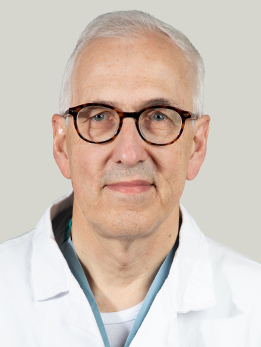
Dr. Warnke directs the functional neurosurgery program at UChicago and was the pioneer in Chicago for implanting directional DBS electrodes. These electrodes enable the stimulation field to be tailored post-surgery, enhancing benefits while reducing speech and mood side effects. He employs both awake microelectrode-guided and asleep image-guided DBS techniques, selecting the most suitable method for each patient rather than adhering to a single technique.
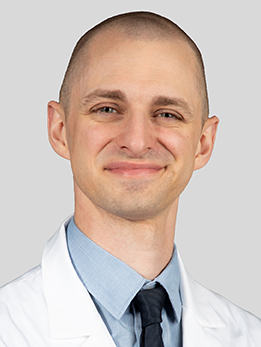
Dr. Satzer is a stereotactic and functional neurosurgeon whose research focuses on the electrophysiology of DBS targets and how electrode placement translates into long-term clinical benefit (Journal of Neurology, Neurosurgery & Psychiatry, 2015). At UChicago, he partners with Dr. Warnke on the DBS service for Parkinson disease, essential tremor, and dystonia.
What Is DBS for Parkinson Disease?
Deep brain stimulation, a surgical option for Parkinson's disease, involves placing slender electrodes in specific, deep-brain areas. These electrodes link to a tiny battery, known as a pulse generator, which is placed under the skin near the collarbone, akin to a heart pacemaker. When activated, this system sends mild electrical pulses that help reduce the unusual brain activity causing tremors, stiffness, and slowness.
DBS is not a cure. Parkinson's disease continues to progress, and medication is typically still needed. However, DBS can significantly improve your daily hours, making them more productive and enjoyable. Neurologists describe this as making your "best off" hours resemble your "best on" hours: you now experience the functionality you previously only had during peak medication times throughout most of your day.
For many patients, DBS also means taking 30-60% less levodopa, which in turn reduces the involuntary writhing movements (dyskinesias) that come from years of medication.
At a Glance
- DBS is considered when your medications still work but motor fluctuations, dyskinesia, or tremor interfere with daily life.
- The best predictor of a good DBS response is how well you respond to levodopa — if levodopa helps, DBS usually helps more.
- Typical patients see a 40-60% improvement in off-medication motor scores and cut their levodopa dose by about 50%.
- The two main targets are the subthalamic nucleus (STN) and globus pallidus internus (GPi); both work, with different tradeoffs.
- Focused ultrasound is an incisionless alternative for tremor-dominant patients who don't want an implanted device.
Already have imaging or a Parkinson Disease (DBS Candidate) diagnosis?
The team can arrange a focused Parkinson Disease (DBS Candidate) review of your scans and medical records, often within 24 hours.
Who Should Think About DBS?
DBS is designed for advanced Parkinson disease, not early disease. Most patients have had Parkinson for four years or more, are on a complicated medication regimen, and still struggle with day-to-day function. The key signs that DBS might help include:
Motor fluctuations and dyskinesia
- Wearing off — your medication stops working well before the next dose is due, leaving you slow, stiff, or frozen
- Unpredictable off periods — sometimes a dose works, sometimes it doesn't
- Dyskinesia — involuntary twisting, swaying, or dance-like movements that come on when your medication peaks
- Taking levodopa every two to three hours just to stay functional
Tremor that won't quit
- Tremor that medication can't control, even at high doses
- Tremor that interferes with eating, writing, dressing, or working
What DBS cannot fix
Deep brain stimulation (DBS) helps with the same symptoms that levodopa does. However, if your symptoms, such as balance issues, falls during medication effectiveness, swallowing difficulties, persistent gait freezing in the on-state, or cognitive decline and dementia, do not respond to levodopa, they likely won't respond to DBS either. If your primary concerns are frequent falls or memory loss, DBS may not be the right option for you.
How Are DBS Candidates Evaluated?
Choosing the right patient is the single most important determinant of a good outcome. At UChicago, candidacy is decided by a multidisciplinary team — neurosurgery, movement disorders neurology, neuropsychology, and psychiatry — not a single surgeon. The workup usually takes several visits and is modeled after the international CAPSIT-PD protocol.
Levodopa challenge
You'll be asked to come in after holding your Parkinson medications overnight (this is your off state). A movement disorder neurologist scores your motor symptoms on the Unified Parkinson's Disease Rating Scale (UPDRS-III). You then take your usual morning dose and are scored again at peak effect (the on state). The difference between those two scores is the single best predictor of how much DBS will help you. A 30% or greater improvement with levodopa is the threshold most teams look for.
Neuropsychological testing
Significant cognitive impairment or dementia is a contraindication to DBS — the surgery can make thinking problems worse. A full neuropsych battery screens for this and also looks at mood, because uncontrolled depression or psychosis needs to be addressed before surgery.
Brain MRI
A high-resolution MRI confirms the diagnosis is consistent with idiopathic Parkinson disease (not a Parkinson-plus syndrome like multiple system atrophy or progressive supranuclear palsy, which don't respond to DBS) and is used to plan the electrode trajectory.
Medical and surgical screening
Because DBS is an elective operation, your team will make sure you're healthy enough to tolerate anesthesia and that anticoagulants, cardiac conditions, and other medical issues are addressed in advance.
How Is DBS Performed?
DBS is really two decisions braided together: which target and which technique. Both decisions are individualized.
STN vs GPi: choosing the target
The two standard targets are the subthalamic nucleus (STN) and the globus pallidus internus (GPi). A large NIH-VA randomized trial (Follett et al., NEJM 2010) showed that both targets produce similar motor improvement, but there are differences worth knowing:
- STN — allows the biggest reduction in levodopa dose (often more than 50%). Tends to be the preferred target for younger patients with severe dyskinesia whose main goal is getting off high-dose medication. Some patients have more mood changes, speech changes, or impulse control issues with STN.
- GPi — directly suppresses dyskinesia and may be gentler on mood, cognition, and speech. Often chosen for older patients, patients with cognitive vulnerability, or patients whose main problem is medication-induced dyskinesia rather than wearing off.
Your team will pick the target based on your symptoms, age, cognition, medication regimen, and your own priorities.
Awake vs asleep: choosing the technique
There are two well-validated ways to place the electrodes.
Awake surgery with microelectrode recording (MER) has been the traditional approach for three decades. You're sedated for the scalp and skull work but wake up for the deep part of the procedure so the team can record electrical activity from individual brain cells through a tiny microelectrode, map the exact boundaries of the target, and test stimulation in real time — watching your tremor stop and checking for any side effects on speech, vision, or movement. It's demanding for the patient but gives exceptional physiologic feedback.
Asleep, image-guided surgery uses intraoperative MRI or CT to place the electrodes with sub-millimeter accuracy while you're under general anesthesia. Published outcomes for asleep DBS are comparable to — and in some series slightly better than — awake DBS for motor improvement, quality of life, and speech (Brodsky et al., Neurology 2017). Asleep DBS is often the better choice for patients who are anxious about being awake, have severe off-state symptoms that make awake testing miserable, or have airway or medical issues.
UChicago offers both approaches and the choice is based on what's best for each patient, not on what the surgeon prefers.
Focused ultrasound: an alternative for some patients
For patients whose main disabling symptom is tremor — and who don't want a permanent implant — MR-guided focused ultrasound offers an incisionless alternative. The procedure uses hundreds of ultrasound beams focused through the intact skull to create a tiny, permanent lesion in the thalamus (or, in newer protocols, the subthalamic region). No incision, no hardware, no battery. Randomized trials have shown meaningful tremor improvement, though the treatment is typically one-sided, is not usually effective for bradykinesia or rigidity, and the lesion is not reversible the way DBS stimulation is.
Programming and follow-up
Completing the surgery is just the beginning. Initially, the electrodes do not function; your neurologist specializing in movement disorders will configure the device through multiple visits over the first few months, adjusting which contacts are active, the voltage, and the pulse width. Medication is usually decreased over the following year. Programming will continue throughout the device's lifespan.
Comparing treatment options for Parkinson Disease (DBS Candidate)?
Complex Parkinson Disease (DBS Candidate) decisions are reviewed across the relevant specialties before a plan is recommended.
What Are the Outcomes?
DBS is one of the most thoroughly studied operations in neurosurgery, and the outcome data — from multiple randomized trials — is consistent. In well-selected patients, here's what to expect:
| Outcome | Typical improvement | Source |
|---|---|---|
| Off-medication UPDRS-III (motor score) | 40-60% better | Deuschl 2006; Weaver 2009 |
| "On" time without dyskinesia per day | +4-6 hours | Weaver 2009 |
| Daily levodopa equivalent dose | 30-50% reduction (more with STN) | Follett 2010 |
| Quality of life (PDQ-39) | Clinically meaningful improvement | Williams 2010 (PD SURG); Schuepbach 2013 (EARLYSTIM) |
| Durability of motor benefit | 5-10+ years | Long-term cohort studies |
Side effects exist and should be discussed honestly. About 1-3% of patients have a serious surgical complication such as bleeding or infection. Stimulation-related side effects — changes in speech, mood, balance, or cognition — are more common but are usually reversible by adjusting the programming. Hardware problems (lead fracture, battery replacement) do occur over years and are fixable.
Selecting an experienced DBS team is the most crucial factor you can manage. Skills in patient selection, target choice, surgical precision, and long-term programming improve with experience, leading to significantly better outcomes in high-volume centers compared to low-volume ones. This is why where you undergo DBS is just as important as whether you undergo DBS.
References
Have Questions About DBS for Parkinson Disease?
Contact UChicago Neurosurgery to discuss your Parkinson Disease (DBS Candidate) diagnosis and the most appropriate next step.
Schedule: (773) 702-2123